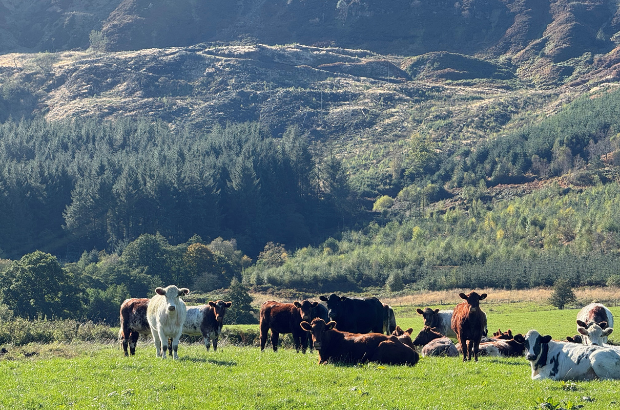
2026 marks 5 years since the Farming in Protected Landscapes (FiPL) programme launched. Since it launched in 2021, FiPL has supported farmers and land managers to deliver projects that help these special places thrive.
Projects contribute to four themes: climate, nature, people and place. Together, FiPL projects have covered 1.3 million hectares, supported 11,500 educational visits, protected 274 heritage assets, and planted 410km of hedgerow and over 310,000 trees. Roughly 1,000 projects have protected or improved rivers, streams and other water bodies.
Originally planned as a 3-year programme, FiPL will now run until March 2029. If you’re farming in a Protected Landscape, you can apply for funding through your local protected landscape body. Details of what you need to know before you apply can be found on GOV.UK.
Defra evaluates FiPL to understand what is working well, assess value for money, and measure the impacts of funded projects. This post shares findings from the latest evaluation report, also drawing on data from earlier reports and latest delivery statistics to March 2026.
Supporting farmers, local communities and the environment
From ancient woodlands and wildflower-rich meadows to rugged coastlines and heather moorlands, England's Protected Landscapes are made up of National Parks, National Landscapes and the Broads. They cover almost a quarter of land in England.
44 Protected Landscapes teams work with local farmers, landowners and communities to create nature-rich, inclusive, and welcoming spaces for everyone to enjoy.
Up to March 2026, FiPL had supported more than 15,000 farmers and land managers to receive funding, across more than 7,400 projects.
Action taking place across our Protected Landscapes directly benefits the local area. Projects must contribute to their Protected Landscape's Management Plan. Funding is granted at a local level, enabling projects to respond to local issues and work at farm level.
Projects also make an important contribution to national targets, including the Protected Landscapes Targets and Outcomes Framework and government’s 30by30 commitment. Through FiPL, over 1,300 hectares of wildlife rich habitat have been created or restored outside protected sites since 2023. This contributes directly to England's legally binding national target for wildlife-rich habitats, set under the Environment Act 2021.
FiPL funding boosts financial resilience and supports the diversification activities of farm businesses. In the 2025 participant survey, 59% of survey respondents reported an improvement in the economic position of their business through FiPL. This is a particularly important outcome considering one of FiPL’s aims is to support farming businesses through the agricultural transition.
Most respondents said they used local contractors for their project and felt their project contributed to a stronger local rural economy.
Growing participation & connection
Participants gave overwhelmingly positive feedback about the programme. From 2021 – 2024, 93% of scheme participants said the programme was either in line or better than their expectations. 88% said they would recommend the programme to others.
The evaluation found evidence of wider benefits for farmers, local communities and rural economies. 83% of participants said the programme contributed to an increase in mental and physical wellbeing. Many participants associated this to feeling part of a community and building networks. FiPL gives partners the opportunity to work together to deliver benefits for people, with tailored support from FiPL officers.
The latest evaluation also found that 69% of participants reported new or stronger relationships with other farmers and land managers in their Protected Landscape. This includes 42% who reported building entirely new relationships and 27% who reported stronger existing relationships.
In addition, 74% reported more engagement with their local Protected Landscape team than before the programme started.
By March 2026, the programme had supported 241 existing farm clusters and facilitation groups and helped to establish 121 new ones. Participants reported that new and stronger relationships helped them gain knowledge, skills and confidence, supporting environmental, economic and social outcomes.
One programme aim is to help Protected Landscape teams work with farmers. Another is to help farmers work with each other. The evaluation suggests the programme supports both.
Reaching new farmers
95% of FiPL officers reported that they are engaging with farmers and land managers with little or no previous experience in an Environmental Land Management (ELM), or other agri-environment scheme.
In nearly two-thirds of cases, engagement with new farmers led to an application to the programme. In other cases, FiPL officers signposted potential applicants to other schemes that were more suitable. Around 9% of participants in 2024 to 2025 were new to agri-environment schemes - in line with the first 3 years of the programme.
Some participants use the programme as a first step into Defra schemes. The evaluation found that for many, FiPL has improved farmers confidence, inspired ideas and improved the opinion of schemes and programmes.
Many participants also return to FiPL with additional projects, often building on the success of their first project. 47% of projects in 2024-2025 were delivered by participants who had previously received FiPL funding. The evaluation found that participants with more than one completed project were more likely to go on to additional schemes than those with a single project: 38% compared with 29%.
FiPL officers are key to success
The evaluation reports highlight the vital role of FiPL officers in supporting applicants and projects.
Officers can provide advice before, during and after project design and delivery. They give participants a local contact who can provide face-to-face support. Across both evaluations, 92% of participants reported feeling very or largely supported by their Protected Landscape team.
Officers also signpost participants and potential applicants to other schemes or funding. The evaluation found this is helping Protected Landscape teams build relationships with the farming sector and provide support during the agricultural transition.
Applying FiPL’s lessons
FiPL officers also monitor project progress on the ground and report on their short- and long-term impact. This strengthens Protected Landscapes teams’ capacity to collect data and map progress against their Management Plan priorities and contributions to national targets.
The level of support from FiPL officers and associated low administrative burden perceived by participants are key strengths across both evaluation reports.
Lessons we’ve learnt through the success of FiPL has helped inform the design of other schemes, including the Farmer Collaboration Fund.
The evaluation suggests more long-term certainty of funding is likely to make the programme more impactful. At the Oxford Farming Conference in January 2026, it was confirmed that FiPL was extended until March 2029, giving more certainty to farmers and partners working in Protected Landscapes.
Looking ahead
The first 5 years of the programme show how this flexible funding model can support projects to strengthen nature, local communities and farm businesses.
Visit GOV.UK to apply now, if you are farming in a Protected Landscape.
We will continue to provide updates on the FiPL scheme and share case studies through the Farming Blog. Make sure you’re subscribed so you don’t miss an update.


Leave a comment