Government sets out ambition of one million more girls to be involved in sport by FIFA Women's World Cup 2035™
Government announces landmark ambition to drive opportunities for one million more girls to play, watch and lead in sport
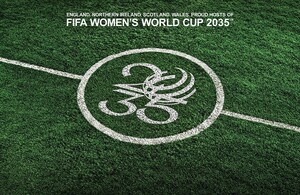
- Women and girls to have equal access to primetime slots at grassroots facilities by FIFA Women’s World Cup 2035™
- Sports must prove men and women share decision-making power and create equal environments - or risk losing public funding under new rules
The Government is today outlining an ambitious new vision for how the FIFA Women’s World Cup 2035™ will be seized on as a once-in-a-generation opportunity to get one million more girls involved in sport - with sports required to commit to structural equality before they unlock public funding.
The vision will see women and girls guaranteed the same access to all funded grassroots facilities as men and boys by the time the UK hosts the biggest event in women’s sport.
As part of the Government’s ongoing work to drive a Decade of Change, this will now be delivered with sports organisations using four pillars, to ensure that: ‘Every girl can dream. Every girl can play. Every girl can watch. Every girl can lead’. The ambition is for progress in these four areas to support a million more girls to be involved in sport, at all levels and in all capacities, when the tournament begins.
In a major step, new rules will be introduced to make sure that sporting organisations are clearly designed by women and men, for women and men. Public funding will only be released when the needs of women and girls are given equal consideration to the needs of men and boys at every step.
The recent growth of women’s sport has been phenomenal, fuelled by the on-field success of the Lionesses and Red Roses. In football alone, participation among women and girls has risen by 2.3 million since the UEFA Women’s European Championship was held in England in 2022.
However, women remain significantly underrepresented in leadership positions. Just a quarter of CEO, chair and performance director roles in major UK sports are held by women, while only 12% of sports federations are led by a female president. By 2035, girls should see women not only on the pitch, but on the touchline, in the boardroom and making the big decisions.
Prime Minister Andy Burnham said:
Football has always been part of who we are. It’s in our towns, our cities and our communities, and for millions of us it’s part of growing up. So I couldn’t be prouder that we’ll be hosting the biggest tournament in the women’s game for the very first time.
But this can’t just be about one summer nine years from now. I want this tournament to change things for good: more girls playing, better pitches and facilities on their doorstep, and a fair deal for women’s sport in every part of the country, not just the big cities. That’s the legacy we’re going to build, and it starts now.
Culture Secretary Lisa Nandy said:
We are lighting up the world when it comes to women’s sport and we’re showing a whole generation of young girls, not just here in the UK, but right around the world, what is possible.
2035 is going to be not just a big moment, but a massive generational shift in the opportunities that we open up to young girls. It has got to be the moment where we say girls don’t just belong on any pitch they choose to play on, but they belong in the boardroom and they belong in the locker room as coaches.
The ‘Dream’ pillar will drive the cultural and structural transformation that means that every girl knows she belongs in sport, while ‘Play’ focuses on giving girls the same chance to participate in sport as boys. ‘Watch’ includes a commitment to work with broadcasters to ensure the biggest moments in women’s sport reach the widest possible audience, while ‘Lead’ will push all sporting organisations to open up more pathways for female coaches, referees, administrators and officials.
Achieving those aims will require buy-in from across sport. The Women’s Sport Taskforce, chaired by Sports Minister Stephanie Peacock, will play a leading role and Government will harness the power of key partners such as the new Equal Sport Project, which launched this month and unites organisations such as UK Sport, Sport England, the FA, RFU, England Netball and the Youth Sport Trust.
Work to deliver a Decade of Change in women’s sport is already well underway. The FIFA Women’s World Cup 2035™ builds on a pipeline of major events that includes last year’s record-breaking Women’s Rugby World Cup, this summer’s Women’s T20 World Cup and the 2027 Tour de France Femmes Grand Départ, which is coming to the UK for the first time. Manchester will also host the Netball World Cup in 2031 and the UK has the Solheim Cup in its sights.
After the Lionesses retained the UEFA Women’s European Championship in 2025, the Government committed to doubling priority access to the grassroots facilities for women and girls’ teams that are now being delivered through a landmark £400 million investment. By 2035, the Government wants to go further, by ensuring that equal priority access is in place for women and girls where new and upgraded grassroots facilities have been delivered.
The Government is also reshaping school sport, to make sure boys and girls have the same access to sports like football, netball, rugby and hockey. Sport England are continuing to drive forward their ‘This Girl Can’ campaign, which has inspired millions of women to get active over the last decade.
Meanwhile the Women’s Football Taskforce has already delivered tangible change, securing a place for the women’s game on the main FA Board, union representation for players in the top two divisions, and improved, specialised insurance products for female athletes.
Sports Minister Stephanie Peacock said:
Hosting the FIFA Women’s World Cup 2035 in the UK will be our catalyst to get more women and girls than ever before involved in sport - and that means shaping, as well as playing, the games we all love.
By tying public funding to structural equality, we will put more women in positions of power and ensure their voices are heard in every decision made by sporting organisations.”
Sport England Chief Executive Simon Hayes said:
Women and girls should have an equal say in how sport is run, as well as equal opportunities to take part. Linking public funding to equal governance is an important step towards making that a reality.
This gives further momentum to The Equal Sport Project. Our focus will be on working with funded partners to ensure women’s and girls’ experiences help shape the decisions they make, creating more opportunities to be active in environments where they feel welcome and supported.
UK Sport Chief Executive Sally Munday:
Linking access to public funding for sporting organisations to institutional gender equality is a big and very welcome step forward.
It will be crucial to delivering The Equal Sport Project’s ambition to make the UK the best place in the world for women and girls in sport and to ensuring that women and girls really feel like they belong in sport at every level.