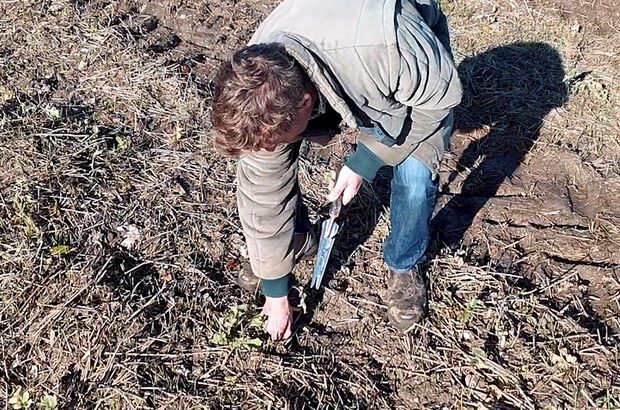
Applications are now open for the Farming Innovation Programme (FIP) 'Healthy Soils and Water for a Sustainable Environment' competition.
Up to £28 million is available for projects that support innovation to improve soil health, water quality and environmental management in livestock and cropping systems on farms in England.
This competition supports practical innovation that helps farmers, growers and foresters manage these connected challenges in commercial settings.
The government’s ‘Farming Roadmap 2050: Growing England’s Future’ outlines the importance of healthy soils and clean water for resilient farm businesses and securing domestic food security. They support crop and grass growth, help farms make better use of nutrients and support a healthy natural environment.
In this post, we cover who can apply, what the competition will fund, key dates and case studies from previous innovation projects.
Overview of the fund
Delivered in partnership with Innovate UK, the competition is looking for projects that take a practical, joined-up approach to soil health, water quality and environmental management.
Farmers, growers or foresters must be involved throughout the project, so solutions are developed with on farm uses at the heart of the work.
Projects must benefit England’s agricultural, horticultural or forestry sectors by developing practical solutions that can:
- improve productivity
- reduce emissions and the environmental impact of farming
- strengthen the resilience of farming businesses
- deliver positive outcomes for farmers, growers or foresters in commercially relevant settings
The project must be led by a UK-registered business, include at least one other business or research organisation, and have total costs between £1 million and £5 million. Projects can last up to 36 months.
How to apply
Before applying, read the full competition guidance on the Innovation Funding Service. It includes the full eligibility, scope and funding rules.
To help you apply you can watch the Innovate UK briefing for potential applicants or download the slides.
The application window is now open, and closes on 28 January 2027 at 11am.
All projects must start by 1 August 2027.
If you want help finding a business partner for this competition, Innovate UK Business Connect’s Agrifood team can help. You can also connect with others interested in this competition by joining the Innovate UK Farming Innovation Programme LinkedIn group.
Case studies
In 2024, we opened a nutrient management competition and awarded more than £15 million to projects developing new ways to improve nutrient use on farm and reduce environmental impact. Below we share some case studies from this previous competition.
Transforming slurry
ElentecBioAg is developing technology to treat dairy cow slurry, turning it into fertiliser nutrients that farmers can use on their own farms or sell on.
Project partners Harper Adams University, Mastek Engineering, Merigan and Stoic Options, were awarded over £800,000. The aim is to reduce costs, aid compliance with water regulations and reduce the UK’s reliance on imported artificial fertiliser.
Check out this video the project produced to understand more about their work:
Improving nutrient retention in poultry litter
Led by Black Bull Biochar, with partners, Avara Foods, SRUC and the UK Centre for Ecology and Hydrology, this project aims to increase nutrient retention in poultry litter.
With funding of £760,000, it is developing ChickenChar, a range of biochar products designed to retain nitrogen and phosphorus in poultry litter. This will reduce ammonia emissions and lock in more phosphates when it’s applied to land as a fertiliser.
The benefits are, improved poultry health and welfare, better working conditions for farm staff, and more effective nutrient management when farmers use poultry manure as an alternative to artificial fertiliser, which saves the farmer money.
Optimising nitrogen application with satellite imagery
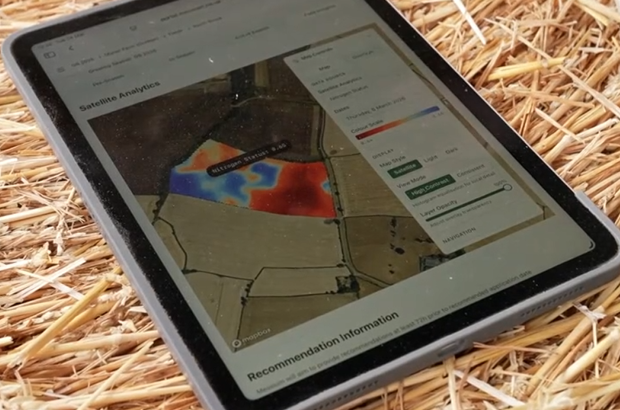
Led by Messium alongside the UK Agri-Tech Centre, The Allerton Project and H L Hutchinson, this project was awarded £759,382 to develop a digital tool that uses satellite data and artificial intelligence (AI) to help farmers decide when and how much nitrogen fertiliser to apply. It combines information about conditions across the field with weather data to support these decisions.
The tool aims to help farmers, agronomists and growers make better use of nitrogen fertiliser, cut costs and reduce environmental impacts such as leaching, run-off and emissions which will be assessed during the project. Developed with feedback from farmers and other users, the tool is intended to be easy to use. In future, it could also support other crops and decisions about grazing.
The project is now in month 23 of 30, with two seasons of testing on working farms completed across the UK. According to the team trials are showing great promise for the developed platform, with Messium's nitrogen recommendations driving gross margin improvements of over £75/ha above Farm Standard in the best performing fields.
Environmental monitoring funding supports new competition
The new Healthy Soils and Water for a Sustainable Environment competition compliments the work of Defra, Innovate UK and the Natural Environment Research Council's (NERC) Innovation in Environmental Monitoring (IEM) programme. This programme aims to strengthen the UK’s environmental monitoring sector by developing and testing new sensing technologies. It awards funding for projects that can be commercialised, supporting both economic growth and closer collaboration between the public and private sectors.
Through our new competition applicants are able to incorporate water and soils monitoring of livestock and crop production systems in their bid, in order to tackle run off and leaching.
Verdant Carbon, alongside the National Institute of Agricultural Botany (NIAB) received funding from the IEM to explore a novel testing methodology for assessing soil biological health. The work looked at soil microbial communities and translated information on what they were doing for soil health into a simple metric that could be understood and used by landowners.
The funding helped test the approach by studying microbes in the soil and growing plants in large soil samples. Researchers measured plant growth to understand how well crops might grow and how healthy the soil was. This helped develop a soil health testing service for farmers.
Dates for your diary
- 19 November 2026 – competition opens
- 28 January 2027 – competition closes
- 31 March 2027 – invite to interview
- 3 May 2027 – interview panel starts
- 23 May 2027 – interview panel ends
- 27 May 2027 – successful applicants informed
- 1 August 2027– all projects must start
Subscribe to the Farming Blog
Subscribe to the Farming Blog for updates on funding opportunities, including new competitions under the Farming Innovation Programme.
Subscribe to receive updates directly to your inbox.



Leave a comment