
Master of Rolls Sir Geoffrey Vos retires from the judiciary
CivilMaster of the RollsSir Geoffrey VosMaster of the RollsSir Geoffrey VosNews
The Master of the Rolls, Sir Geoffrey Vos, will tomorrow (Saturday 31 October 2026) retire after a career championing the modernisation of justice.
On his appointment to the role – a position which dates back to at least the 13th century – in 2021 Sir Geoffrey became the Head of Civil Justice and second most senior judge in England and Wales. He took office after serving as Chancellor of the High Court from 2016.
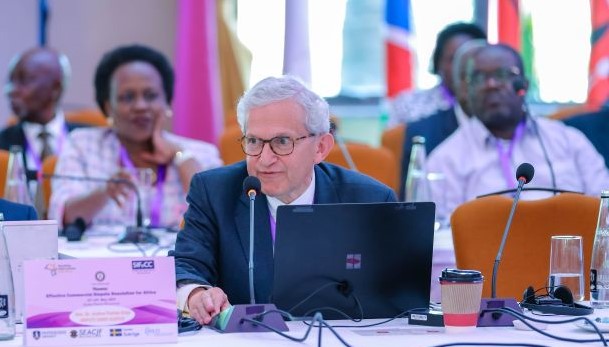
As Master of the Rolls, Sir Geoffrey also served as President of the Civil Division of the Court of Appeal, with responsibility for the deployment and organisation of judges’ work within it. During a decade in senior judicial leadership, Sir Geoffrey has been a prominent advocate for the modernisation and digitalisation of civil justice. He has regularly been consulted on and spoken publicly about the implications of emerging technologies, including blockchain, artificial intelligence and cryptocurrencies.
As Head of Civil Justice, Sir Geoffrey has been a champion of the important work of County Courts across the country. During his tenure he has visited more than 100 courts across England and Wales to better understand the experiences of court staff and users.
Sir Geoffrey’s judicial career began with his appointment as a Deputy High Court Judge in 1999. He went on to sit in the Courts of Appeal of Jersey and Guernsey for four years from 2005, before being appointed a High Court Judge in October 2009 and a Lord Justice of Appeal in 2013.
During his 13 years in the Court of Appeal, he heard some of the most complex and legally significant cases across civil, family and tribunal law. For example, he delivered the judgment in Churchill v Merthyr Tydfil County Borough Council [2023] EWCA Civ 1416, which confirms that in certain circumstances, the court has power to order parties to engage in a non-court-based dispute resolution process.
In addition to his judicial duties, Sir Geoffrey is a member of the LawtechUK Panel. He was instrumental in establishing the UK Jurisdiction Taskforce in 2018, and the International Jurisdiction Taskforce in 2025. Together these bodies are at the forefront of establishing clarity on the legal principles applicable to new technologies and have published legal statements on subjects ranging from the status of digital assets to liability for AI Harms.
He is Vice President of the European Law Institute (ELI), where he contributes a judicial perspective and promotes engagement with judicial colleagues internationally as well as with the wider legal community.
Throughout his time in the senior judiciary, Sir Geoffrey has been a prolific public speaker, addressing audiences at academic institutions, professional law societies, technology and industry bodies and in international organisations, such as the London School of Economics, Lincoln’s Inn, the Law Society, the International Bar Association and London International Disputes Week. His speeches have focused in particular on the responsible use of AI, the role of mediation, social mobility in the legal professions and digitalisation across the civil courts.
Upon his retirement from the judiciary, Sir Geoffrey will continue to contribute to these evolving conversations through his work with ELI, the UK Jurisdiction Taskforce and the International Jurisdiction Taskforce. Sir Geoffrey will also chair the steering group of the Standing International Forum of Commercial Courts, an organisation which facilitates collaboration and cooperation between the world’s commercial courts.
Sir Geoffrey said:
“It has been a privilege to undertake this historic role at a time when technological change is faster than ever. I have much enjoyed leading the charge for the responsible use of new technologies in our civil courts, whilst maintaining human judicial decisions at the heart of the system.
“I am proud of the advances we have made over the years in digitalisation, reducing paper-dependency in civil justice and improving access to justice for all. These advances would not have been possible without the cooperation, innovation and good humour of judges across the system. I want to thank them for all that they contribute towards the administration of justice.”