OPSS reflects on how the 2026 Royal Society Pairing Scheme, supported by the Government Science & Engineering Profession, strengthened connections between research and regulation.
Opening the door to collaboration
When OPSS took part in the Royal Society Pairing Scheme, we hoped it would help us better understand how researchers and regulators can work together to strengthen the evidence that supports effective product regulation. What we gained was a clearer appreciation of the breadth of research taking place across academia that resonates with the work of the Office for Product Safety and Standards (OPSS), together with a better understanding of how regulators can build meaningful connections with external expertise.
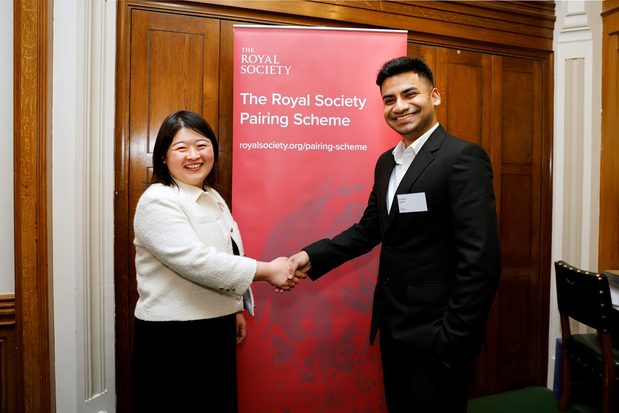
We were paired with Dr Rohit Gupta, a Senior Research Fellow at University College London (UCL). A range of teams worked together to plan, deliver and promote the programme. Through work-shadowing activities, laboratory demonstrations, knowledge-sharing and engagement opportunities, colleagues showcased how science and engineering support regulatory decisions.
Inside OPSS and UCL
Rohit participated in work-shadowing activities at OPSS’s London office, engagement with Trade Association stakeholders, visits to our Teddington laboratories, and discussions with colleagues across different functions. He also presented his research to an extended Science Team audience, creating opportunities for exchange between OPSS colleagues and researchers working in areas relevant to future regulatory interests.
The reciprocal visit to UCL was equally valuable. The OPSS Science and Engineering Team visited the Marshgate campus and its Manufacturing Futures Laboratory, the Hawkes Institute and UCL Engineering Buildings. We were warmly welcomed by academics and students who generously shared their work, organised laboratory visits and demonstrations, and discussed both the opportunities and challenges associated with their research. We were impressed by the breadth of expertise across the university and the potential for this research to contribute to future regulatory challenges. The visit also provided an opportunity to explore how academic expertise and facilities could support future evidence needs.
Why engagement matters
A key reflection from the scheme was the value of engaging with academia before specific regulatory questions arise. Building relationships early helps regulators understand where expertise sits, what facilities are available, and how that expertise can be accessed when evidence, testing or scientific advice is needed. For OPSS, the greatest value of the scheme was gaining a clearer understanding of the wider research landscape and strengthening connections that could support future evidence gathering.
The experience also reinforced the importance of helping researchers understand the routes available for engagement with government. We were able to introduce OPSS's scientific engagement activities, including our Areas of Research Interest (ARIs), Registers of Specialists (RoS), the Scientific Advisory Group on Chemical Safety in Consumer Products (SAG-CS), and wider routes for academic engagement.
Continuing the conversation
The pairing has continued to generate interest beyond the exchange. The experience has been shared amongst OPSS colleagues, featured in the OPSS research newsletter, and a LinkedIn post directed readers to a UCL article offering an academic perspective. Together, these activities raise awareness of opportunities for engagement between regulators and the research community.
Most importantly, the scheme demonstrated that meaningful collaboration often begins with conversation. By creating opportunities for researchers and regulators to better understand each other's environments, priorities and challenges, the Royal Society Pairing Scheme helps build relationships that can support evidence gathering and regulatory decision-making. We hope the connections established through this exchange will continue to benefit both OPSS and the wider research community.
Interested in taking part? Applications are open until 30 October 2026 for Civil Servants. Find out more and apply through the Royal Society Pairing Scheme.
If you are an academic and interested in future collaborations, email opss.research@businessandtrade.gov.uk to receive updates about relevant opportunities.
Leave a comment