Reducing the risk of Ips typographus infestation at Whiligh Estate
A Spruce Site Assessment (SSA) helped a historic Sussex estate to reduce bark beetle risk and plan a more resilient, productive woodland.
Key facts
- site: Whiligh Estate, East Sussex
- type: priority spruce removal area with Norway spruce and Sitka spruce
- size: 76-hectare site with 31.6 hectares surveyed, 688 tonnes of spruce for felling
- felling method: a combination of clear fell, regeneration felling and isolated felling of individual trees using hand felling and harvester felling
- species restocked: 9,100 trees at 1,100 stems per hectare, including wild cherry, wild service tree, red oak, Douglas fir, black walnut, English oak, hornbeam, sweet chestnut and common alder
- grants: Spruce Site Assessment and tree health pilot (THP) scheme
- timeframe: 13 working days from SSA application submission to agreement offered and 6 months to claim paid, 8.5 months to a live THP agreement
Whiligh Estate’s legacy: from Westminster to Sutton Hoo
Whiligh Estate is a private residential estate in the High Weald National Landscape, home to a wide range of woodland with a history stretching back over 600 years. The estate’s oldest and most famous contribution came in 1393, when King Richard II commissioned the hammerbeam roof for Westminster Hall. Whiligh’s mature pedunculate oaks provided the timber for this enormous, self-supporting structure, which remains to this day the largest medieval timber roof anywhere in Northern Europe.
Twice since then, the Palace of Westminster has returned to Whiligh for help. The first occasion was in 1913, when deathwatch beetles had eaten into the original beams and new oak was needed to replace them. The second came after World War II, when the roof suffered serious damage during the Blitz and sections had to be rebuilt using timber felled at Whiligh once again.
This tradition of supplying oak for significant national projects hasn’t stopped. In December 2024, the estate responded to an appeal for timber from the Sutton Hoo Ship’s Company project. Based in Woodbridge, Suffolk, the project is building a full-scale, working reconstruction of the seventh-century Anglo-Saxon burial ship discovered at Sutton Hoo, using traditional tools, authentic materials and the original archaeological findings as a guide.
Assessing Whiligh Estate’s woodlands for Ips typographus risk
Today, the estate’s woodlands face a new challenge. Whiligh lies within the proactive spruce removal Area, designated because of the heightened risk of Ips typographus (eight-toothed spruce bark beetle) incursion. The condition of the estate’s spruce varies significantly from healthy, resilient isolated trees to poor condition spruce crops that have had limited woodland management since planting due to access constraints and difficult terrain. In October 2025, the landowner’s forestry agent recommended applying for a Spruce Site Assessment.
The agent reported that their experience of the SSA process was positive, saying that the application was straightforward and accessible, with clear guidance notes explaining exactly what information was needed and why. The timescale from submitting the application to receiving an agreement offer took just 13 working days. Crucially, the grant also funded the time needed to accurately map management and felling proposals, allowing the agent to give detailed, professional support throughout this planning process.

Stand of spruce trees before felling. Credit: Laura Henderson, English Woodlands Forestry
Building on the existing woodland management plan
The estate already had a woodland management plan in place. The SSA complements this by pinpointing the exact location and condition of spruce across the property, along with the operational constraints, environmental considerations and forestry operations that spruce removal would involve. A condition scoring system was used to clearly identify the condition of the spruce, helping with planning of felling and extraction. In total, the survey covered 31.6 hectares of the site, within which 4.3 hectares of Norway and Sitka spruce was identified.
The survey also identified constraints the woodland management plan hadn’t accounted for. These included an active badger sett, watercourses and river placements, steep slopes and fencing that would need removing and replacing. Walking the site with a contractor to estimate costs for the work also helped identify felling constraints early, along with the risks, requirements and processes needed for effective timber and brash extraction.
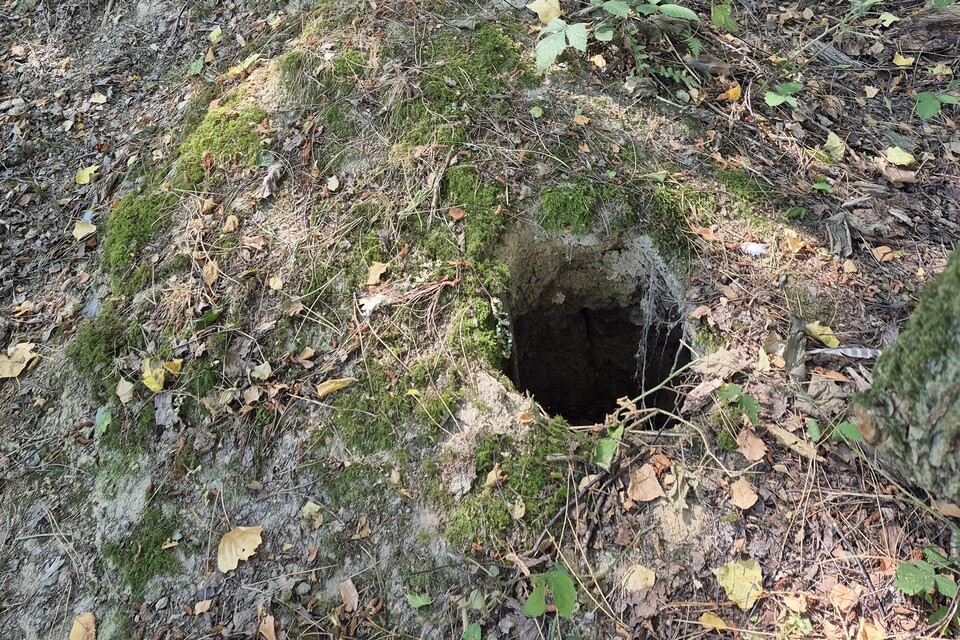
Badger sett identified during the survey.
Laura Henderson, English Woodlands Forestry, said:
To complete the SSA survey properly, we walked the site with a contractor. This helped with costing up the future works that might need to take place, meaning there were no surprises going into the tree health pilot. This level of detail wouldn’t have happened without the SSA grant.
Clear data from the assessment led to confident decisions
Spruce is a key productive part of Whiligh’s woodlands, so understanding the full implications of removing it mattered. The SSA gave the landowner exactly that through detailed mensuration data on timber volume, tonnage and stocking density, which fed directly into cost calculations for the THP. It identified around 700 tonnes of spruce suitable for felling, to be done through a mix of clear felling, regeneration felling and the removal of individual isolated trees.
With this data, the landowner had a clear picture of likely costs, income and overall viability before committing to proactive removal of the spruce. That early clarity, combined with early contractor engagement, meant any unexpected costs and delays could be avoided once work began. The badger sett is a good example because the SSA flagged it early, so the necessary permissions and mitigation measures were all in place before any felling started.
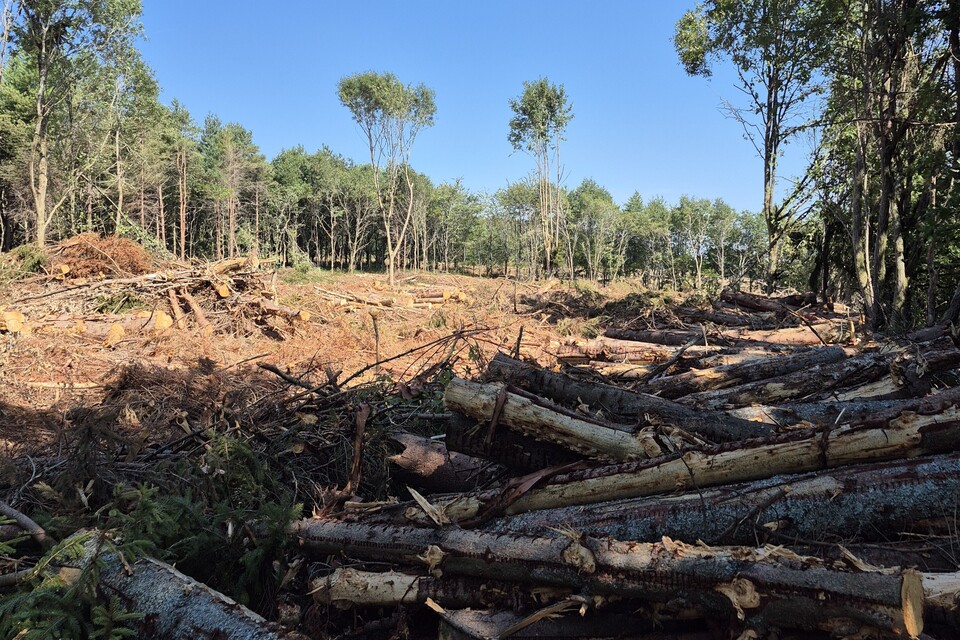
An area of woodland with felled spruce, with some occasional standing broadleaf trees.
Josh Diplock, English Woodlands Forestry, said:
The way the SSA assessed the Ips infestation threat and evaluated felling considerations was the key motivation for the landowner to act upon spruce removal, significantly reducing any future risk of Ips typographus infestation.
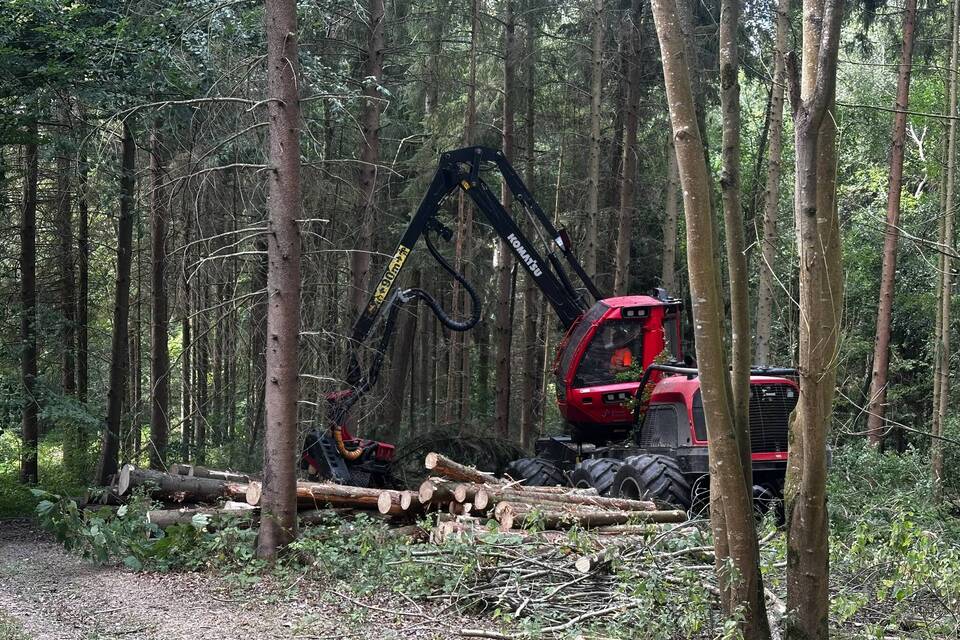
A forestry harvester beside a stack of felled spruce trees. Credit: Dave Funnell, Powell Forestry Ltd
Looking beyond spruce removal
The SSA proved to be a valuable springboard into the next stage. Information gathered during the assessment supported a subsequent application for the THP proactive felling offer, helping to keep the project moving without losing momentum. Following a successful application, felling was proposed to start 8 to 9 months after completing the SSA, with restocking planned for the following planting season.
The process also sparked wider conversations about managing the estate’s woodland, infrastructure and long-term resilience, extending well beyond spruce alone. It helped identify a range of opportunities and challenges, while raising awareness of the risks posed by Ips typographus and the consequences of leaving susceptible material unaddressed.
One of the opportunities the survey identified was for permanent infrastructure improvements, including a loading bay measuring 237.5 metres2. Part funded by the THP grant, it will support woodland management and timber production long after the current spruce removal programme is complete.

Loading bay construction. Credit: Dave Funnell, Powell Forestry Ltd
The estate’s long-term vision is to transform woodlands once dominated by spruce into something more resilient and productive, managed through continuous cover forestry. Once the spruce has been removed, around 9,100 trees are planned for restocking, including oak, Douglas fir and a range of other mixed broadleaves.
The SSA grant covered every stage of the process, from surveying the spruce to planning the operations and costs involved, giving the landowner the confidence to make informed decisions about proactively removing the spruce. The result is a woodland that’s both safer and stronger.
The risk of Ips typographus at Whiligh has been significantly reduced and poor-quality spruce is steadily being replaced with woodland designed for the future.
Find out more about the Spruce Site Assessment and how to apply, along with information on grants for spruce at risk from Ips typographus in the proactive removal area.
We also have guidance on Ips typographus, the demarcated area and how it affects woodlands.